

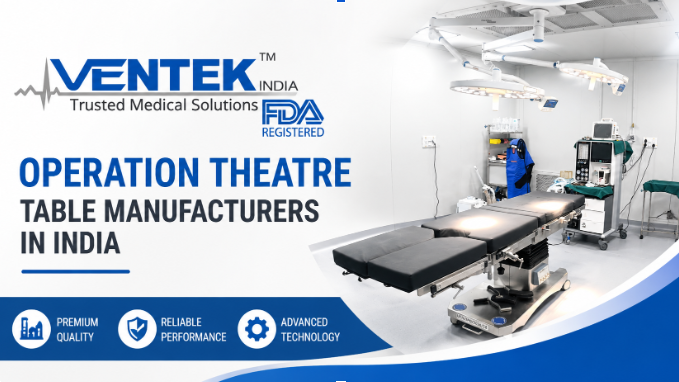
Buying an operating table is not a one-time transaction. The table will be used in hundreds of surgeries every year, and its performance depends as much on the company behind it as on the product itself. That is why choosing the right OT table manufacturer is one of the most important decisions a hospital procurement team makes when setting up or upgrading an operation theatre.
Quotations often look similar on paper. Two tables can share the same photo, the same list of movements and almost the same price, yet perform very differently after a year of daily use. This article explains what separates a dependable operation table manufacturer from a supplier who simply resells products.
Manufacturer or Trader? Know Who You Are Buying From
Many companies selling OT tables do not build them. They source tables from other factories and add their own branding. This is not always a problem, but it affects three things that matter to hospitals: control over quality, availability of spare parts and speed of service.
A real manufacturer controls the design, materials, welding, hydraulic or electric systems and final testing. When something goes wrong, they can trace the problem to its source and fix it. Ask the supplier directly whether they manufacture the table, and if possible, ask to visit the factory or see a video of the production line.
What to Look for in an OT Table Manufacturer
1. Regulatory registrations and certifications
In India, medical devices such as OT tables need to follow CDSCO requirements. Check the manufacturer’s registration, ISO certification and any other approvals relevant to your facility. Hospitals that buy through government tenders should also check whether the manufacturer is listed on GeM.
2. Range of models
A manufacturer with a wide range can match the table to the theatre instead of pushing one model for every need. A good range includes hydraulic tables for general use, electric and electro-hydraulic tables for advanced surgery, and speciality tables for gynaecology, ophthalmology and orthopaedics.
3. Build quality you can inspect
Look at the tabletop, the column and the base. Check the finish of welds, the thickness of the steel, the quality of the coating and how firmly the table locks in position. Ask how the table is tested before dispatch, including load testing and movement checks.
4. Accessories and compatibility
Surgeons rely on accessories: arm boards, leg holders, shoulder supports, head rests, lithotomy stirrups and orthopaedic or neuro attachments. Confirm that the accessories you need are available and fit the table rails correctly. Mismatched accessories are a common source of frustration in the theatre.
5. After-sales service
This is where many purchases go wrong. Ask how many service engineers the manufacturer has, which cities they cover and the typical response time. Find out whether spare parts are stocked locally. A table that sits idle for two weeks waiting for a part costs the hospital far more than any initial discount.
6. Warranty terms
Read the warranty carefully. Check which parts are covered, for how long, and whether the hydraulic pump, motors, control unit and remote are included. Ask about annual maintenance contracts after the warranty ends.
Questions to Ask Before Placing an Order
- Can you share references from hospitals that have used your tables for three years or more?
- What is the maximum patient weight the table can safely handle?
- Is the tabletop radiolucent, and is there enough space for a C-arm?
- Which accessories are included in the quoted price?
- How long does installation and staff training take?
Red Flags to Watch For
Be careful if a supplier cannot share a physical factory address, avoids questions about who makes the table, or offers a price far below the market without explaining why. Vague warranty wording, no written service commitment and missing registration documents are also warning signs. A short delay in checking these details is far better than a table that fails in the middle of a busy surgical schedule.
Why Indian Manufacturers Are Gaining Ground
Indian OT table manufacturers have improved steadily in design and quality. Many now export to Africa, the Middle East and Southeast Asia. For hospitals in India, a domestic manufacturer offers practical benefits: shorter delivery times, easier access to spare parts and service teams who can reach the site quickly. Pricing is usually more competitive than imported brands, without a large gap in everyday performance for most surgical uses.
Final Thoughts
The best operation table manufacturer is not necessarily the one with the lowest quotation. It is the one that builds a reliable table, supports it with accessories and service, and stays reachable when your team needs help. Compare a few manufacturers, see the tables in use, and confirm service terms in writing before you decide.
If you are shortlisting suppliers, this overview of what to expect from an OT table manufacturer in India is a useful place to start comparing models and features.


